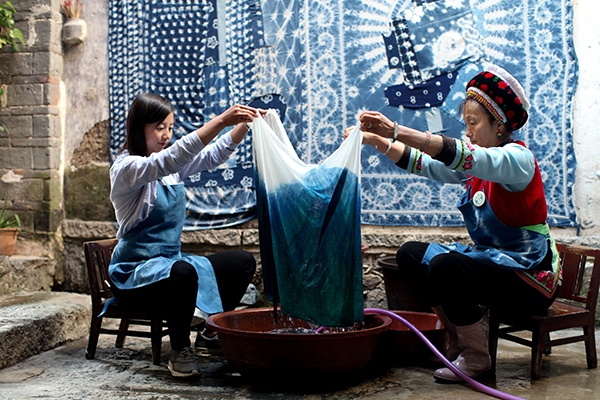
Costume of Bai Ethnic Group
Introduction
The Bai ethnic group, residing primarily in the Dali Bai autonomous prefecture in Southwest China's Yunnan province, is renowned for its rich cultural heritage and traditional attire. The Bai people's costumes reflect their history, social status, and artistic aesthetics, characterized by intricate designs, vibrant colors, and unique craftsmanship. The traditional clothing of the Bai people is not only a symbol of cultural identity but also an expression of their harmonious relationship with nature.
Traditional Clothing
The traditional clothing of the Bai ethnic group varies by gender and age, reflecting the diverse cultural expressions within the community. The costumes are crafted with meticulous attention to detail, often featuring elaborate embroidery and unique tie-dye patterns, which are hallmarks of Bai craftsmanship. Each type of attire - for men, women, and children - carries its distinct style and significance.
Men's Attire
Men's traditional clothing in the Bai community is characterized by simplicity and functionality, often comprising a loose-fitting jacket paired with trousers. The jackets are typically adorned with simple embroidery, reflecting the natural motifs prevalent in Bai culture. The colors are usually subdued, with white being a prominent choice, symbolizing purity and simplicity. Men's attire is designed to provide comfort and ease of movement, suitable for the agrarian lifestyle of the Bai people.
Women's Attire
Women's costumes in the Bai ethnic group are more elaborate and colorful compared to men's. The traditional attire includes a jacket with wide sleeves, a long skirt, and an embroidered apron. The intricate embroidery on women's clothing often depicts floral patterns and scenes from nature, showcasing the Bai people's artistic skills and appreciation for their environment. The use of vibrant colors like red, blue, and green is common, symbolizing vitality and beauty. Women's headdresses, often decorated with silver ornaments, add a touch of elegance and grandeur to the overall attire.
Children's Clothing
Children's clothing in the Bai community is designed with both comfort and aesthetics in mind. The garments are often miniature versions of adult attire, featuring similar styles and patterns. Bright colors and playful designs are chosen to reflect the innocence and energy of youth. Embroidery on children's clothing tends to be more whimsical, with motifs of animals and flowers, encouraging creativity and cultural learning from a young age.
Dyeing and Embroidery Techniques
The Bai ethnic group's mastery of dyeing and embroidery techniques is a distinguishing feature of their traditional costumes. Tie-dyeing is a particularly significant craft, recognized as a national intangible cultural heritage in China. The process involves making knots in the fabric, dipping it in dye, and drying it in the sun, resulting in intricate patterns that reflect local scenery and natural elements.
Embroidery is another key aspect of Bai costumes, showcasing the community's artistic skills and attention to detail. The embroidery patterns often depict floral motifs, animals, and geometric shapes, each carrying symbolic meanings. The craftsmanship involved in both tie-dyeing and embroidery is passed down through generations, preserving these traditional arts as a vital part of Bai culture.
Fabrics and Materials
The Bai ethnic group is renowned for its use of natural fabrics and traditional materials in crafting their costumes. Cotton and linen are the primary fabrics used, favored for their breathability and comfort. These materials are often handwoven, reflecting the Bai people's commitment to traditional techniques and sustainable practices. The use of natural dyes, extracted from local plants, is a testament to the Bai people's harmonious relationship with their environment.
The choice of materials is influenced by the Bai people's connection to their land and resources. The durability and functionality of the fabrics make them suitable for the Bai's agrarian lifestyle, while the natural dyes provide a vibrant yet eco-friendly color palette. The combination of traditional materials and techniques results in costumes that are both aesthetically pleasing and culturally meaningful.
Cultural Significance
The costumes of the Bai ethnic group hold deep cultural significance, serving as a medium to convey social values, beliefs, and identity. Traditional attire is worn during important community events and festivals, symbolizing unity and cultural pride. The motifs and colors used in the clothing resonate with the Bai people's respect for nature and their spiritual beliefs. Costumes are also an expression of the Bai people's craftsmanship, with each piece reflecting the skills passed down through generations.
In addition to their aesthetic and cultural value, the costumes play a role in social functions within the community. They can indicate a person's age, marital status, and social standing, providing a visual language understood by the Bai people. This traditional attire fosters a sense of belonging and continuity, connecting the present with the past.








